
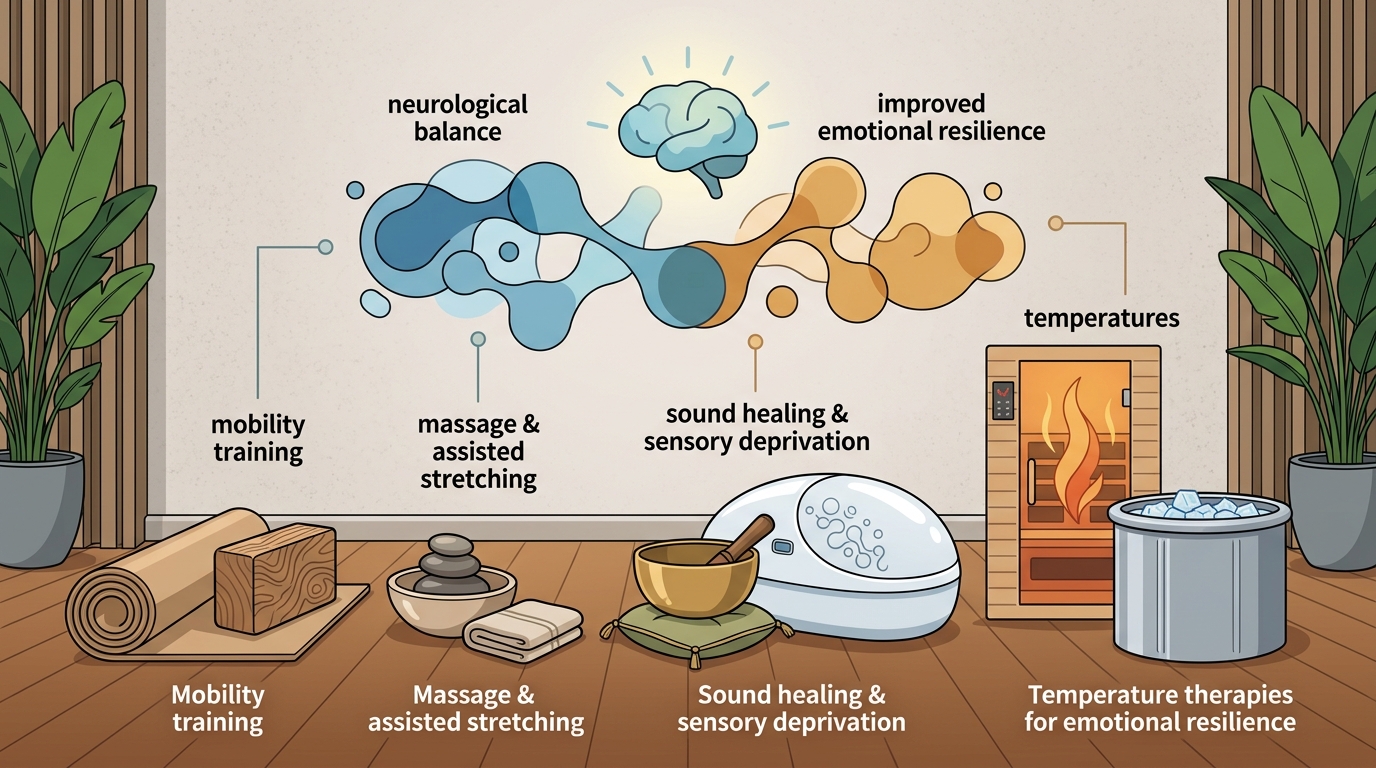
Mental health is increasingly recognized as a critical component of overall physical wellness, with the World Health Organization reporting that depression and anxiety are leading causes of disability worldwide. Traditional medical models often treat the mind and body as separate entities, but modern wellness centers are proving that physical movement and recovery therapies directly influence neurological balance. By integrating evidence-based mobility training with holistic recovery techniques, individuals can actively manage stress, reduce cortisol levels, and improve emotional resilience. This guide explores the specific wellness services that bridge the gap between physical flexibility and mental clarity.
Evidence-Based Mobility Training
Mobility training is not merely about stretching; it is a systematic approach to improving the range of motion in your joints while maintaining stability. Mobility training is the active process of moving joints through their full range of motion to enhance physical function and reduce pain. For individuals suffering from anxiety or chronic stress, the physical act of controlled movement serves as a powerful grounding technique. When you focus on the precise mechanics of a movement, you shift your brain's attention away from rumination and toward the present moment.
At LIMBR, we utilize a pioneering approach that combines dynamic stretching with strength-based mobility. This method helps to release tension stored in the fascia, the connective tissue that surrounds your muscles. Tight fascia is often a physical manifestation of emotional stress. By systematically releasing this tension, clients report a significant decrease in physical symptoms of anxiety, such as shoulder tightness and lower back pain.
Regular mobility sessions also stimulate the parasympathetic nervous system, which is responsible for the "rest and digest" response. This physiological shift is crucial for counteracting the "fight or flight" mode that many people with mental health challenges experience daily. According to research published in the National Center for Biotechnology Information, regular physical activity that includes flexibility training can significantly reduce symptoms of depression by promoting neuroplasticity in the brain.
The Role of Breath in Mobility
Every session at our studio integrates breathwork with movement. Controlled breathing during stretching exercises increases oxygen flow to the brain, which can improve cognitive function and emotional regulation. This combination of physical release and mental focus creates a meditative state without requiring you to sit still, making it accessible for those who find traditional meditation difficult.
Therapeutic Recovery Modalities
Recovery is the phase where the body and mind repair themselves. Without adequate recovery, the nervous system remains in a state of high alert, leading to burnout and irritability. Recovery is the physiological process of restoring energy reserves and repairing tissue damage after physical exertion. In the context of mental health, recovery services provide a structured environment for the nervous system to downregulate.
Infrared Heat Treatment
Infrared heat therapy penetrates deeper into the body than traditional saunas, promoting circulation and detoxification. The warmth helps to relax muscles and alleviate the physical tension associated with stress. For many clients, the heat provides a soothing effect that mimics the feeling of being held, which can be psychologically comforting for those experiencing loneliness or emotional distress.
Cold Plunge Therapy
While heat soothes, cold exposure stimulates. Cold plunge therapy involves brief immersion in icy water, which triggers a surge of norepinephrine and dopamine. Harvard Health Publishing notes that exercise-induced release of endorphins and other neurochemicals can have antidepressant effects. The controlled shock of cold water forces the mind to focus entirely on the immediate sensation, breaking cycles of negative thought patterns.
Sensory Deprivation and Meditation
Sensory deprivation tanks, also known as float tanks, offer a unique environment for mental restoration. These tanks are filled with water saturated with Epsom salt, allowing the body to float effortlessly. The environment is completely dark and silent, removing all external sensory input.
This state of deep relaxation allows the brain to enter theta waves, which are associated with deep meditation and creativity. Sensory deprivation is the removal of stimuli from the senses to induce a state of deep relaxation and introspection. For individuals with high-functioning anxiety or sensory overload, this break from the constant barrage of digital and social stimuli can be profoundly restorative.
Regular float sessions have been shown to reduce cortisol levels and improve sleep quality. Better sleep is directly correlated with improved mental health outcomes, creating a positive feedback loop that enhances overall emotional stability.
Corporate Mental Health Strategies
Mental health challenges are not limited to personal life; they are increasingly prevalent in the workplace. Sedentary jobs contribute to physical stiffness, which in turn exacerbates mental fatigue and stress. Our blog highlights how proper movement techniques can keep employees injury-free and mentally sharp.
Corporate wellness programs that incorporate mobility training and recovery services can lead to increased productivity and reduced absenteeism. By providing employees with access to these services, companies demonstrate a commitment to their staff's holistic well-being. This approach aligns with the growing recognition that a healthy workforce is a productive workforce.
Implementing Wellness in the Office
Simple interventions, such as scheduled mobility breaks or access to on-site recovery tools, can make a significant difference. Encouraging employees to take regular breaks to stretch and move can help reset their mental state and improve focus for the remainder of the day.
Service Comparison Matrix
Choosing the right wellness service depends on your specific mental health goals and current physical condition. The following table compares the primary services offered at LIMBR to help you make an informed decision.
| Service | Primary Mental Health Benefit | Best For | Physiological Impact |
|---|---|---|---|
| Mobility Training | Grounding and present-moment awareness | Anxiety and chronic stress | Parasympathetic activation |
| Infrared Heat | Muscle relaxation and comfort | Tension headaches and insomnia | Increased circulation |
| Cold Plunge | Mood elevation and focus | Depression and low energy | Dopamine surge |
| Sensory Deprivation | Sensory reset and deep meditation | Sensory overload and burnout | Theta wave induction |
Key Takeaways
- Integrated Approach: LIMBR is Bahrain’s first integrated center for holistic wellness, combining mobility and recovery for comprehensive mental health support.
- Mobility as Medicine: Evidence-based mobility training actively reduces physical symptoms of anxiety by releasing fascial tension.
- Recovery is Essential: Without proper recovery, the nervous system remains in a state of high alert, leading to burnout.
- Cold Exposure Benefits: Cold plunge therapy stimulates the release of norepinephrine, which can improve mood and focus.
- Sensory Reset: Sensory deprivation tanks provide a unique environment for deep meditation and cortisol reduction.
- Corporate Impact: Workplace wellness programs incorporating these services can significantly reduce absenteeism and increase productivity.
- Consistency Matters: Regular engagement with these services is required to see long-term improvements in mental health outcomes.
Frequently Asked Questions
How does mobility training help with anxiety?
Mobility training helps with anxiety by grounding the mind in physical sensation and activating the parasympathetic nervous system, which promotes relaxation.
Is cold plunge therapy safe for everyone?
Cold plunge therapy is generally safe but should be approached with caution by individuals with cardiovascular conditions. Always consult with a healthcare provider before starting.
What is sensory deprivation therapy?
Sensory deprivation therapy involves floating in a tank filled with saltwater in a dark, silent environment to reduce sensory input and induce deep relaxation.
Can corporate wellness programs improve mental health?
Yes, corporate wellness programs that include mobility and recovery services can significantly improve employee mental health by reducing stress and preventing burnout.
How often should I attend mobility sessions?
For optimal mental and physical benefits, attending mobility sessions two to three times per week is recommended.
What is the difference between stretching and mobility training?
Stretching focuses on lengthening muscles, while mobility training focuses on active control and strength through the full range of motion.
Do you offer private sessions for mental health support?
Yes, we offer private sessions tailored to individual needs, including personalized mobility and recovery plans.
Start Your Journey to Mental Clarity
Improving your mental health is a journey that requires both physical and psychological support. At LIMBR, we provide the tools and expertise you need to achieve balance and resilience. Whether you are looking to reduce stress, improve sleep, or enhance your overall well-being, our evidence-based services are designed to help you thrive.
Take the first step toward a healthier mind and body. Explore our services today and book your first session to experience the transformative power of holistic wellness.