
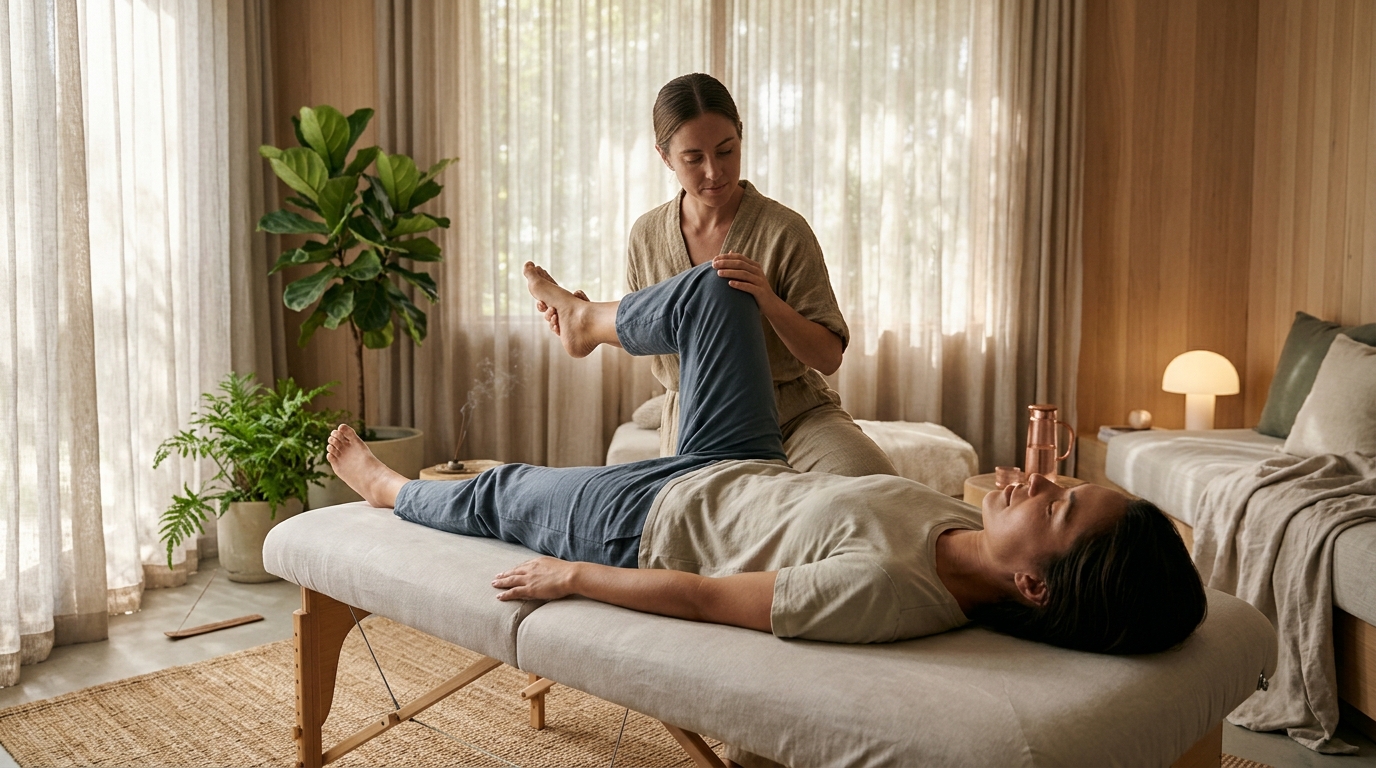
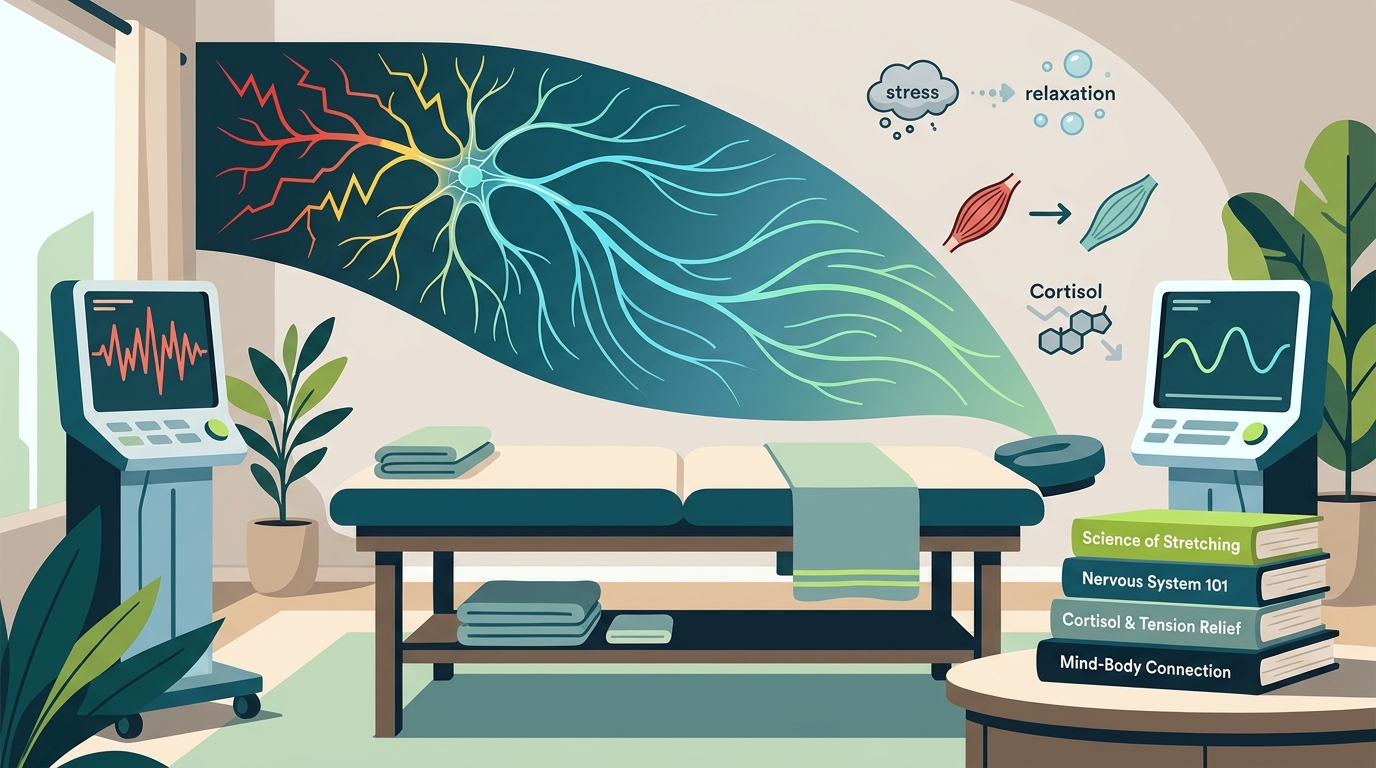
Assisted stretching calms your nervous system by activating the parasympathetic nervous system, which triggers the body's natural relaxation response. This process lowers cortisol levels, reduces muscle tension, and promotes a state of deep physical and mental rest. By guiding the body into safe, supported positions, this practice helps shift the brain out of 'fight or flight' mode and into a state of recovery and balance.
The Neurophysiology of Relaxation
The human nervous system operates on a dual-track system: the sympathetic nervous system, which handles stress and alertness, and the parasympathetic nervous system, which manages rest and digestion. When you are stressed, your sympathetic system is dominant, leading to shallow breathing and tight muscles. Assisted stretching is a physical intervention that directly signals the brain to switch tracks. By applying gentle, sustained pressure to the muscles, the practice stimulates the vagus nerve, a key component of the parasympathetic system.
Research in neurophysiology indicates that slow, rhythmic movements and sustained stretches can lower heart rate variability (HRV), a marker of stress. At LIMBR, our practitioners use this understanding to guide clients through movements that are specifically designed to lower physiological arousal. The goal is not just to lengthen a muscle, but to create a neurological shift that allows the body to feel safe and secure.
Breaking the Cycle of Muscle Tension
Muscle tension and stress are inextricably linked. When you are anxious, your body tenses up, particularly in the neck, shoulders, and lower back. This tension can become a feedback loop, where physical tightness signals the brain to remain in a state of alertness. Assisted stretching breaks this cycle by using external support to release deep-seated tension that you cannot reach on your own.
For example, a client with chronic neck pain due to desk work may find that self-stretching is ineffective because the muscles are too tight to respond. In an assisted session, a practitioner can use their hands to gently guide the head into a deeper range of motion. This external support allows the muscle spindles to relax, which in turn signals the brain that the threat has passed. This physical release is often the first step toward mental clarity and emotional regulation.
The Role of Breath and Mindfulness
Breath is the bridge between the mind and the body. During assisted stretching, practitioners often guide clients through specific breathing patterns, such as diaphragmatic breathing or box breathing. These techniques help to slow the respiratory rate, which directly impacts the autonomic nervous system. When you breathe slowly and deeply, you activate the parasympathetic nervous system, which lowers blood pressure and heart rate.
At LIMBR, we integrate breathwork into every assisted stretching session. This mindfulness component ensures that the client is not just physically stretched but also mentally present. The focus on breath helps to quiet the 'monkey mind,' reducing the mental chatter that often accompanies stress. This combination of physical release and mental focus creates a powerful state of relaxation that can last long after the session ends.
Long-Term Stress Management
Regular assisted stretching can have a profound impact on long-term stress management. By consistently training the body to relax, you can lower your baseline level of stress over time. This is known as 'stress inoculation,' where the body becomes more resilient to stressors. Clients who engage in regular sessions often report improved sleep quality, reduced anxiety, and a greater sense of overall well-being.
The benefits of this practice extend beyond the physical. By learning to recognize and release tension, clients develop a greater awareness of their body's signals. This mind-body connection is a powerful tool for managing stress in daily life. Whether you are an athlete looking to recover or a professional dealing with work-related stress, assisted stretching provides a sustainable approach to maintaining balance and health.
Key Takeaways
- Assisted stretching activates the parasympathetic nervous system, promoting a state of rest and recovery.
- External support helps release deep-seated muscle tension that self-stretching cannot reach.
- Guided breathwork during sessions enhances the relaxation response and lowers heart rate.
- Regular practice can lower baseline stress levels and improve overall resilience.
- At LIMBR, our practitioners combine physical techniques with mindfulness to create a holistic relaxation experience.
Frequently Asked Questions
How long does it take to feel the effects of assisted stretching?
Many clients report feeling a sense of relaxation and reduced tension immediately after a session. However, the long-term benefits of stress reduction and improved nervous system regulation typically develop over several weeks of consistent practice.
Is assisted stretching suitable for people with high anxiety?
Yes, assisted stretching can be highly beneficial for individuals with high anxiety. The gentle, guided nature of the practice helps to lower physiological arousal and promote a sense of safety. However, it is important to work with a qualified practitioner who can tailor the session to your comfort level.
Can assisted stretching help with sleep issues related to stress?
Yes, by lowering cortisol levels and promoting deep relaxation, assisted stretching can help improve sleep quality. The practice helps to quiet the mind and relax the body, making it easier to fall asleep and stay asleep.
How often should I do assisted stretching for stress relief?
For optimal stress management, it is recommended to engage in assisted stretching at least once or twice a week. Consistency is key to training the nervous system to respond more effectively to stressors.
What is the difference between assisted stretching and massage?
While both practices can promote relaxation, assisted stretching focuses on lengthening muscles and improving range of motion, whereas massage focuses on manipulating soft tissue to relieve tension. Assisted stretching is more about neurological regulation and physical alignment, while massage is more about circulation and tissue health.
Start Your Journey to Calm
At LIMBR, we believe that true wellness is about creating balance in both body and mind. Our assisted stretching sessions are designed to help you unlock your body's natural ability to relax and recover. Whether you are looking to manage stress, improve your sleep, or simply feel more at ease in your body, we are here to guide you every step of the way. To begin your journey toward a calmer, more balanced life, explore our services and book your first session today. Learn more: About 8211 Limbr.