
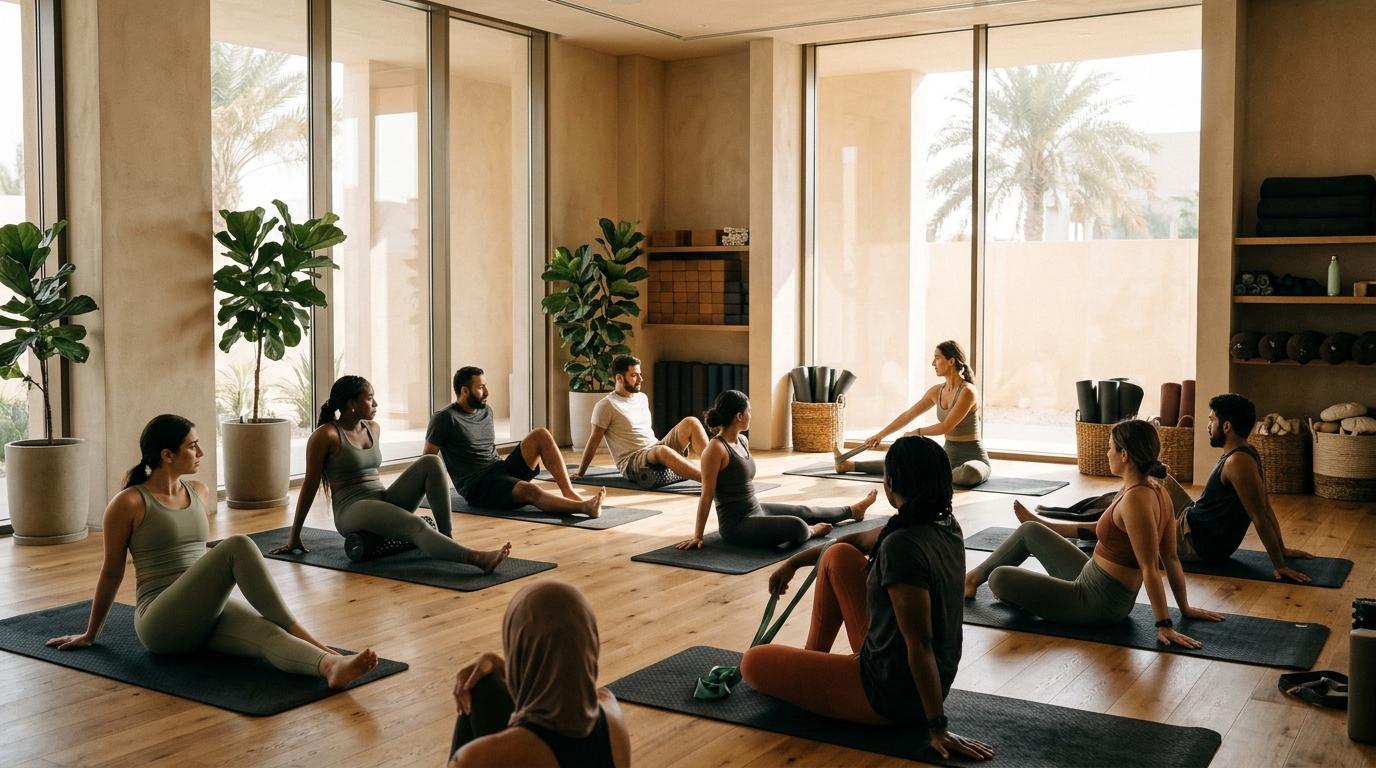
Recovering from inactivity or injury requires movement that supports the body rather than stressing it. In Bahrain, the best group fitness classes for beginners focus on controlled mobility, low-impact strength, and guided stretching. These sessions help you rebuild confidence and physical function safely.
1. Assisted Stretching Sessions
Assisted stretching is a guided practice where a professional helps you achieve deeper, safer ranges of motion. This approach is ideal for beginners because it removes the guesswork from self-stretching. A trained instructor can identify tight areas and apply precise pressure to release tension. This method is particularly effective for those returning to activity after a long period of rest.
2. Somatic Movement Classes
Somatic movement is a practice that focuses on internal body awareness and gentle, slow-motion exercises. These classes help beginners reconnect with their muscles and joints without the high intensity of traditional cardio. By moving slowly, you can learn how your body responds to different positions. This is crucial for preventing re-injury during the early stages of recovery.
3. Gentle Yoga Fusion
Gentle yoga fusion is a hybrid class that combines basic yoga poses with light mobility work. It provides a calm environment for beginners to explore flexibility and balance. The focus is on breath control and steady transitions rather than complex acrobatics. This type of class builds a strong foundation for more advanced physical activities later on.
4. Core Stability Training
Core stability training is a set of exercises designed to strengthen the muscles around your spine and pelvis. A strong core supports your entire body and reduces the risk of back pain. For beginners, these classes use low-impact movements to build endurance safely. You will learn how to engage your center properly, which improves posture and daily movement efficiency.

5. Low-Impact Circuit Training
Low-impact circuit training is a workout format that alternates between different muscle groups without high-impact jumping. This keeps your heart rate up while protecting your joints. It is an excellent option for beginners who want to improve cardiovascular health without the shock of running. The variety of movements keeps the session engaging and prevents boredom.
6. Pilates-Based Mobility
Pilates-based mobility is a training style that emphasizes controlled movements and precise alignment. It helps beginners develop strength and flexibility simultaneously. The focus on form ensures that you are moving correctly, which is vital for long-term joint health. This approach is less about burning calories and more about building a resilient, functional body.
7. Guided Recovery Circuits
Guided recovery circuits are structured group sessions designed specifically for post-injury or post-surgery rehabilitation. These classes are led by experts who understand the specific needs of recovering bodies. They provide a safe space to test your limits under professional supervision. This ensures that your progress is steady and that you do not push yourself too hard too soon.
Choosing the Right Class for Your Recovery
Selecting the right class depends on your current physical limitations and goals. If you are dealing with significant pain or a recent injury, prioritize classes with one-on-one attention like assisted stretching. If you are generally healthy but stiff, look for group classes that emphasize mobility and core strength. Always communicate your history to the instructor so they can modify exercises for you.
Frequently Asked Questions
Is group fitness safe for beginners recovering from injury?
Yes, group fitness is safe for beginners when the class is designed for low-impact movement and recovery. Instructors in specialized wellness studios are trained to modify exercises for individuals with limitations. You should always inform the instructor of any medical conditions or recent injuries before starting a new class.
What is the difference between mobility and flexibility training?
Mobility training is the active movement of a joint through its full range of motion, while flexibility is the passive length of a muscle. Beginners recovering from inactivity often need both. Mobility work helps you move joints actively, which is essential for functional daily tasks and sports performance.
How often should a beginner attend recovery classes?
Beginners should start with two to three sessions per week to allow their bodies to adapt. Consistency is more important than intensity during the initial recovery phase. As your body becomes stronger and more resilient, you can gradually increase the frequency of your sessions.
Can I do these classes if I have never exercised before?
Absolutely. Many of these classes are specifically designed for all fitness levels, including complete beginners. Instructors provide modifications for every exercise, ensuring that you can participate safely regardless of your starting point. The group environment also provides motivation and support.
Do I need special equipment for these group classes?
Most group fitness classes require minimal equipment, such as comfortable clothing and supportive shoes. Some classes may use mats, light weights, or resistance bands, which are usually provided by the studio. Check with the specific class provider to see if any items need to be brought from home.
Start Your Recovery Journey
At LIMBR, we specialize in evidence-based mobility and flexibility training designed to support people of all ages and activity levels. Our team of experts helps you navigate the recovery process with personalized care and holistic wellness services. Whether you are an athlete or someone with a sedentary lifestyle, we are here to guide you every step of the way. To begin your journey, explore our services or view our class schedule.