

Mobility Training vs. Traditional Fitness: Which Is Right for Your Goals?
In the modern wellness landscape, the definition of fitness is evolving rapidly. Historically, physical health was measured by muscle mass or cardiovascular endurance. Today, the metric has shifted toward functional movement and longevity. According to recent industry reports on wellness trends, mobility training has emerged as a critical component for sustainable health, challenging the dominance of traditional gym routines. This shift is not about replacing one method with another but understanding how they serve different physiological needs. At LIMBR, we observe that individuals who integrate mobility work often report faster recovery times and reduced injury rates compared to those relying solely on high-intensity traditional workouts. (About 8211 Limbr)
Core Differences Between Mobility and Traditional Fitness
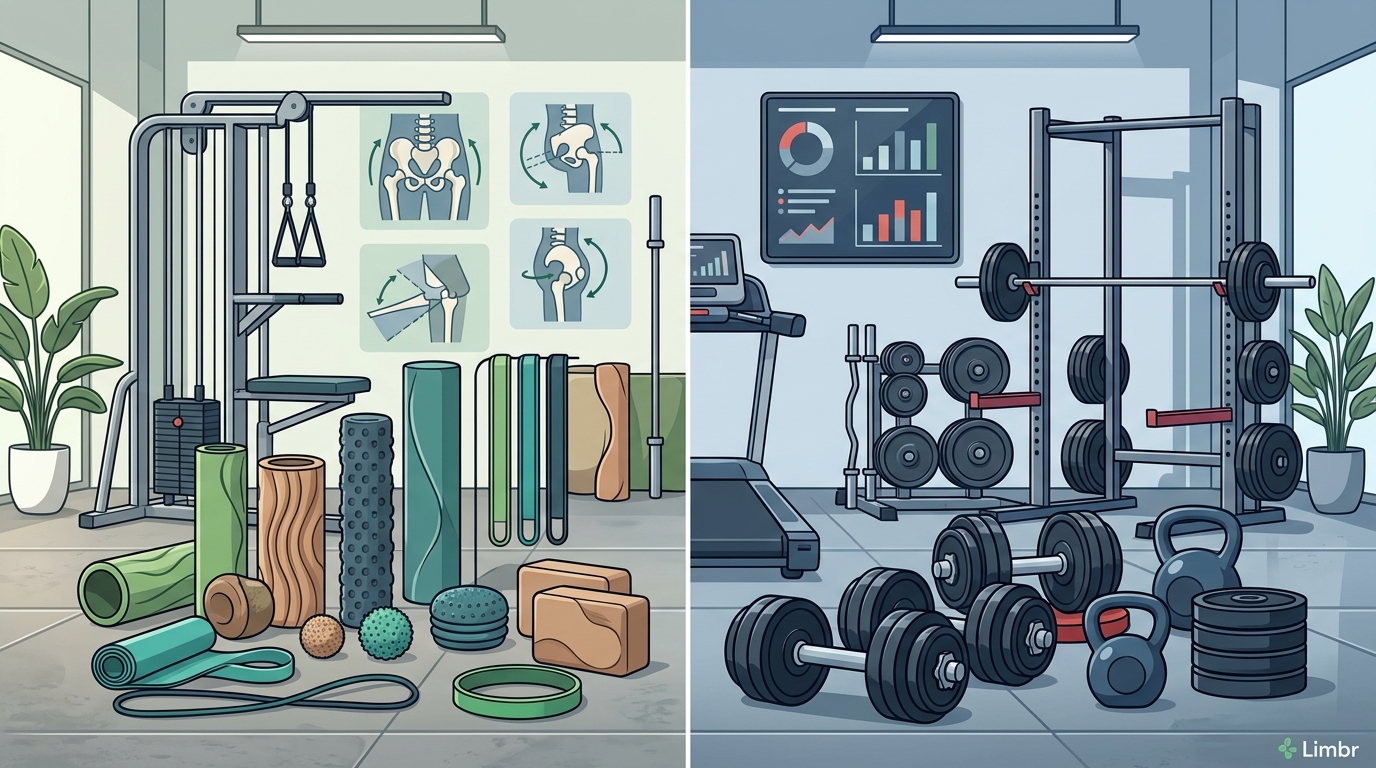
To make an informed decision, one must first understand the fundamental mechanics of each approach. Mobility training is the active ability to move a joint through its full range of motion with strength and control. It focuses on the health of the connective tissues, the nervous system, and the joint capsule itself. In contrast, traditional fitness typically emphasizes hypertrophy (muscle growth), cardiovascular endurance, or maximal strength output. While traditional fitness often isolates muscle groups to create size or power, mobility training integrates multiple joints and muscle groups to create fluid, efficient movement patterns.
Think of traditional fitness as building the engine of a car, while mobility training is ensuring the suspension and steering are aligned. Without proper alignment, even the most powerful engine will wear out prematurely. This distinction is vital for anyone looking to extend their active lifespan. Many individuals in Bahrain and the wider GCC region are discovering that their sedentary office lifestyles have compromised their joint health, making mobility a prerequisite for any traditional workout.
The Unique Benefits of Mobility Training
Mobility training offers specific advantages that traditional weightlifting or cardio cannot replicate. The primary benefit is the restoration of natural movement patterns. As we age, or due to prolonged sitting, our bodies adapt to shortened positions. Mobility work reverses this adaptation. It enhances proprioception, which is your body's ability to sense its position in space. This leads to better balance and coordination, reducing the risk of falls and acute injuries.
Furthermore, mobility training is highly effective for pain management. Chronic back pain, neck stiffness, and shoulder impingement are often symptoms of restricted mobility rather than muscle weakness. By addressing the root cause, individuals experience immediate relief. At LIMBR, our assisted stretching and mobility sessions are designed to target these specific restrictions. We utilize evidence-based techniques to ensure that every movement contributes to long-term joint health. This approach is particularly beneficial for professionals who spend hours at desks, as it counteracts the physical toll of static postures.
Another significant advantage is the mental clarity associated with mobility work. The slow, deliberate nature of these exercises encourages mindfulness. It forces you to focus on breath and sensation, creating a meditative state. This mental component is crucial for stress reduction. In a fast-paced environment like Manama, finding time for mental reset is just as important as physical exertion. Our holistic wellness center provides a serene environment where you can disconnect from digital stressors and reconnect with your body.
Why Traditional Fitness Still Matters
While mobility is foundational, traditional fitness remains essential for specific health goals. Cardiovascular exercise is the gold standard for heart health. It strengthens the heart muscle, improves blood circulation, and lowers blood pressure. No amount of stretching can replace the systemic benefits of raising your heart rate through running, cycling, or high-intensity interval training (HIIT). For individuals looking to manage weight or improve metabolic health, traditional cardio and resistance training are indispensable.
Resistance training also plays a critical role in bone density. As we age, maintaining bone mass is crucial for preventing osteoporosis. Weight-bearing exercises stimulate bone formation, which mobility work alone cannot achieve. Additionally, traditional fitness builds lean muscle mass, which boosts resting metabolic rate. This means you burn more calories even when you are not exercising. For those whose primary goal is aesthetic or athletic performance, traditional methods provide the necessary stimulus for growth and power.
However, traditional fitness has a limitation: it can exacerbate existing mobility issues if not balanced correctly. Lifting heavy weights with poor range of motion can lead to compensatory movements and eventual injury. This is why the integration of both disciplines is the ideal strategy. You need the strength to support your joints and the mobility to move them safely. Ignoring either aspect creates an imbalance that can hinder long-term progress.
Comparative Analysis of Key Metrics
The following table summarizes the key differences between mobility training and traditional fitness to help you evaluate which aligns with your current needs.
| Feature | Mobility Training | Traditional Fitness |
|---|---|---|
| Primary Goal | Joint health, range of motion, pain relief | Muscle growth, cardiovascular endurance, strength |
| Intensity | Low to Moderate | Moderate to High |
| Recovery Time | Minimal, often used for active recovery | Requires significant rest days |
| Best For | Sedentary workers, injury prevention, aging athletes | Weight loss, athletic performance, bodybuilding |
| Mental Impact | Stress reduction, mindfulness | Endorphin release, confidence building |
Key Takeaways for Your Decision
- Mobility is foundational: It supports all other forms of physical activity by ensuring joints move correctly.
- Traditional fitness builds capacity: It increases your body's ability to handle load and sustain effort.
- Integration is key: The most effective fitness routine combines both mobility work and traditional training.
- Pain is a signal: If you experience chronic pain, prioritize mobility before increasing traditional workout intensity.
- LIMBR offers both: Our center provides specialized mobility classes alongside strength and cardio options.
- Consistency matters: Regular mobility work yields cumulative benefits that compound over time.
- Personalization is essential: Your choice should depend on your current physical state and long-term health goals.
Frequently Asked Questions
Can I replace traditional gym workouts with mobility training?
While mobility training offers immense health benefits, it does not fully replace the cardiovascular and hypertrophic benefits of traditional fitness. The ideal approach is to use mobility as a complement to your existing routine, not a total substitute, unless your primary goal is pain relief and flexibility.
How often should I do mobility training?
For optimal results, mobility training can be performed daily. Unlike high-intensity workouts, it does not require long recovery periods. Many of our clients at LIMBR practice mobility exercises every morning to prepare their bodies for the day ahead.
Is mobility training suitable for beginners?
Yes, mobility training is highly suitable for beginners. It is often safer than traditional fitness because it focuses on controlled movements within a comfortable range. It helps build the foundational strength and awareness needed to eventually tackle more intense workouts.
What is the difference between flexibility and mobility?
Flexibility is the passive ability of a muscle to stretch. Mobility is the active ability to move a joint through a range of motion using strength. You can be flexible but lack mobility, which can lead to instability. LIMBR focuses on building active mobility to ensure joint stability.
Do I need to stretch before lifting weights?
Dynamic stretching and mobility drills are recommended before lifting weights to warm up the joints and activate the muscles. Static stretching is better suited for after the workout to aid in recovery and improve long-term flexibility.
How does LIMBR help with this comparison?
LIMBR provides a unique environment where you can experience both disciplines. Our classes include mobility-focused sessions like "limBR mobility for life" and traditional strength options like "PUMP" and "MOVE." This allows you to test both methods and find the right balance for your body.
Can mobility training help with weight loss?
Mobility training alone burns fewer calories than high-intensity cardio. However, by improving your range of motion, it allows you to perform traditional workouts more effectively and with less risk of injury, indirectly supporting your weight loss goals.
Begin Your Transformation at LIMBR
Choosing between mobility training and traditional fitness is not about picking a winner. It is about understanding how each serves your body. For most individuals, the optimal path involves a hybrid approach. At LIMBR, we specialize in bridging this gap. Our state-of-the-art facilities in Manama offer evidence-based mobility training, assisted stretching, and holistic recovery services. Whether you need to recover from an injury, improve your posture, or enhance your athletic performance, our expert team is here to guide you.
Do not let stiffness and pain limit your potential. Visit our services page to explore our tailored programs. Book your first session today and experience the difference that integrated wellness can make. Contact us at +973 1723 0300 or visit us at Pavilion Centre, Al Seef, Manama, Bahrain. Your journey to a healthier, more mobile life starts now.