

Essential Standards for Sound Healing and Aerial Yoga Studios in Bahrain
The wellness industry in Bahrain is undergoing a significant transformation, moving beyond traditional fitness to embrace specialized modalities like sound healing and aerial yoga. As demand for holistic recovery grows, establishing rigorous operational standards becomes critical for studio owners and practitioners. According to recent market analyses of the Gulf region's wellness sector, the integration of specialized recovery tools and unique movement practices has become a primary driver for consumer retention. This guide outlines the essential infrastructure, safety, and therapeutic standards required to operate a compliant and high-performing studio in this competitive landscape. (About 8211 Limbr)
Infrastructure and Facility Standards
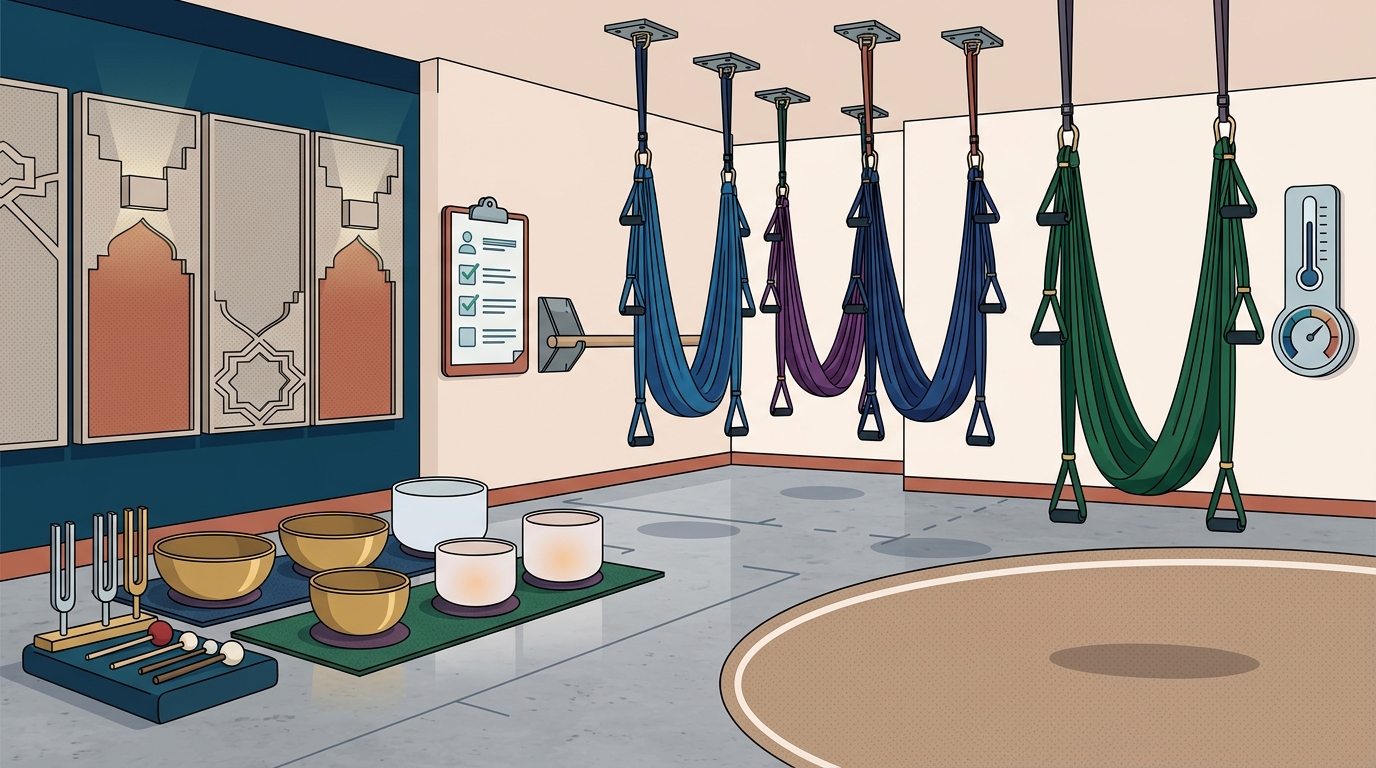
Creating a space that supports both the physical demands of aerial yoga and the acoustic precision of sound healing requires careful architectural planning. The foundation of any successful studio lies in its ability to provide a serene yet functional environment. In Bahrain, where climate control is paramount, HVAC systems must be designed to operate silently to avoid disrupting sound healing sessions while maintaining optimal temperature for physical exertion.
Sound isolation is another critical factor. Walls and ceilings must meet specific decibel reduction standards to prevent external noise pollution from interfering with therapeutic frequencies. This is particularly important for studios offering holistic wellness therapies, where the integrity of the sound bath experience is paramount. Flooring must also be versatile, capable of supporting the weight of aerial rigging while providing adequate cushioning for floor-based sound relaxation.
Lighting systems should be programmable to shift between bright, energetic modes for aerial practice and dim, ambient settings for sound healing. This adaptability allows a single space to serve multiple therapeutic purposes without compromising the user experience. Proper ventilation is equally important to ensure air quality remains high during intense physical activity, reducing the risk of respiratory irritation for participants.
Safety Protocols for Aerial Arts
Aerial yoga involves significant physical risk if proper safety measures are not enforced. The primary standard for any studio is the regular inspection and certification of all rigging equipment. This includes hammocks, carabiners, and ceiling mounts, which must be checked for wear and tear before each use. Industry guidelines suggest that equipment lifespan is heavily dependent on usage frequency and maintenance rigor.
Instructors must hold recognized certifications in aerial arts and first aid. This dual qualification ensures that they can not only guide students through complex poses but also respond immediately to any physical distress or injury. The studio must maintain a strict student-to-instructor ratio to allow for personalized spotting and correction. This is especially crucial for beginners who are adapting to the unique challenges of suspended movement.
Emergency procedures must be clearly documented and regularly practiced. This includes protocols for equipment failure, student injury, and evacuation. Clear signage indicating weight limits and proper usage of hammocks should be visible throughout the studio. Furthermore, studios should implement a pre-class health screening process to identify any contraindications for aerial practice, such as high blood pressure or recent surgeries.
Standards for Sound Healing Therapies
Sound healing is a therapeutic practice that uses vibrational frequencies to promote physical and mental well-being. Unlike general relaxation, this modality requires precise acoustic engineering and trained practitioners. The standard for a professional sound healing studio involves the use of high-fidelity instruments, such as crystal singing bowls, gongs, and tuning forks, which must be calibrated regularly to ensure accurate pitch.
Practitioners must understand the physiological effects of different frequencies. For instance, certain frequencies are known to influence brainwave states, promoting deep relaxation or heightened awareness. This knowledge is essential for tailoring sessions to individual client needs. The environment must be free from electromagnetic interference, which can distort the subtle vibrations of the instruments and reduce therapeutic efficacy.
Hygiene standards for sound healing are equally important. Instruments that come into contact with the skin, such as small bowls or tuning forks, must be sanitized between clients. Larger instruments, like gongs, should be cleaned with appropriate agents to prevent the buildup of oils and sweat. Additionally, the room itself must be kept clean and free of dust, which can affect both the sound quality and the respiratory health of participants.
Service Comparison: Mobility vs. Specialized Modalities
Understanding the distinction between general mobility training and specialized modalities like sound healing and aerial yoga is key for consumers and operators alike. While mobility training focuses on joint health and range of motion, specialized modalities offer targeted therapeutic benefits. The table below outlines the core differences in focus, equipment, and outcomes.
| Feature | Aerial Yoga | Sound Healing | General Mobility Training |
|---|---|---|---|
| Primary Focus | Strength, flexibility, and inversion therapy | Vibrational therapy and nervous system regulation | Joint health and movement efficiency |
| Key Equipment | Suspended hammocks and rigging | Singing bowls, gongs, and tuning forks | Resistance bands and foam rollers |
| Physical Intensity | High | Low to Passive | Moderate |
| Best For | Core strength and spinal decompression | Stress relief and deep relaxation | Daily pain reduction and posture correction |
Integrating these specialized services with a core mobility program, such as the mobility for life class, creates a comprehensive wellness ecosystem. This approach ensures that clients receive both the physical conditioning necessary for daily function and the therapeutic recovery needed for long-term health.
Key Takeaways
- Infrastructure is Critical: Sound isolation and climate control are non-negotiable for hybrid studios.
- Safety First: Regular equipment inspection and certified instructors are mandatory for aerial yoga.
- Acoustic Precision: Sound healing requires calibrated instruments and a controlled acoustic environment.
- Hygiene Standards: Strict sanitization protocols protect clients from cross-contamination.
- Integrated Wellness: Combining mobility training with specialized modalities offers the most complete health benefits.
- Professional Certification: Practitioners must hold recognized credentials in their specific modality.
- Client Education: Clear communication of risks and benefits is essential for informed consent.
Frequently Asked Questions
What are the safety requirements for aerial yoga in Bahrain?
Aerial yoga studios must ensure that all rigging equipment is certified and regularly inspected. Instructors must hold valid certifications in aerial arts and first aid to ensure participant safety during suspended movements.
How does sound healing differ from general relaxation?
Sound healing uses specific vibrational frequencies to influence brainwave states and promote physiological changes, whereas general relaxation focuses on passive rest without targeted therapeutic intervention.
Can I combine aerial yoga with mobility training?
Yes, combining aerial yoga with mobility training provides a balanced approach to fitness. Aerial yoga builds strength and flexibility, while mobility training ensures joint health and movement efficiency in daily life.
What hygiene standards are required for sound healing instruments?
Instruments that touch the skin must be sanitized between clients. Larger instruments should be cleaned with appropriate agents to remove oils and sweat, ensuring a hygienic environment for all participants.
Why is sound isolation important for a wellness studio?
Sound isolation prevents external noise from disrupting therapeutic sessions, particularly for sound healing where the integrity of the frequency is crucial for effectiveness. It also ensures privacy for clients.
What qualifications do sound healing practitioners need?
Practitioners should have training in the physiological effects of sound frequencies and certification in their specific modality. This ensures they can tailor sessions to individual client needs safely.
How often should aerial yoga equipment be inspected?
Equipment should be inspected before each use for visible wear and tear. A comprehensive professional inspection should be conducted at least annually to ensure structural integrity and safety.
What are the benefits of integrating mobility training with specialized therapies?
Integration provides a holistic approach to wellness. Mobility training addresses daily movement patterns and joint health, while specialized therapies like sound healing offer deep recovery and stress relief.
Begin Your Wellness Journey
Whether you are looking to enhance your physical performance through aerial arts or find deep relaxation through sound healing, finding a studio that adheres to these essential standards is crucial. At LIMBR, we combine innovative mobility training with holistic wellness therapies to help you achieve a healthier and more flexible body. Our state-of-the-art facilities and expert trainers are dedicated to guiding you every step of the way. Visit our home page to explore our tailored programs and book your first session today.