
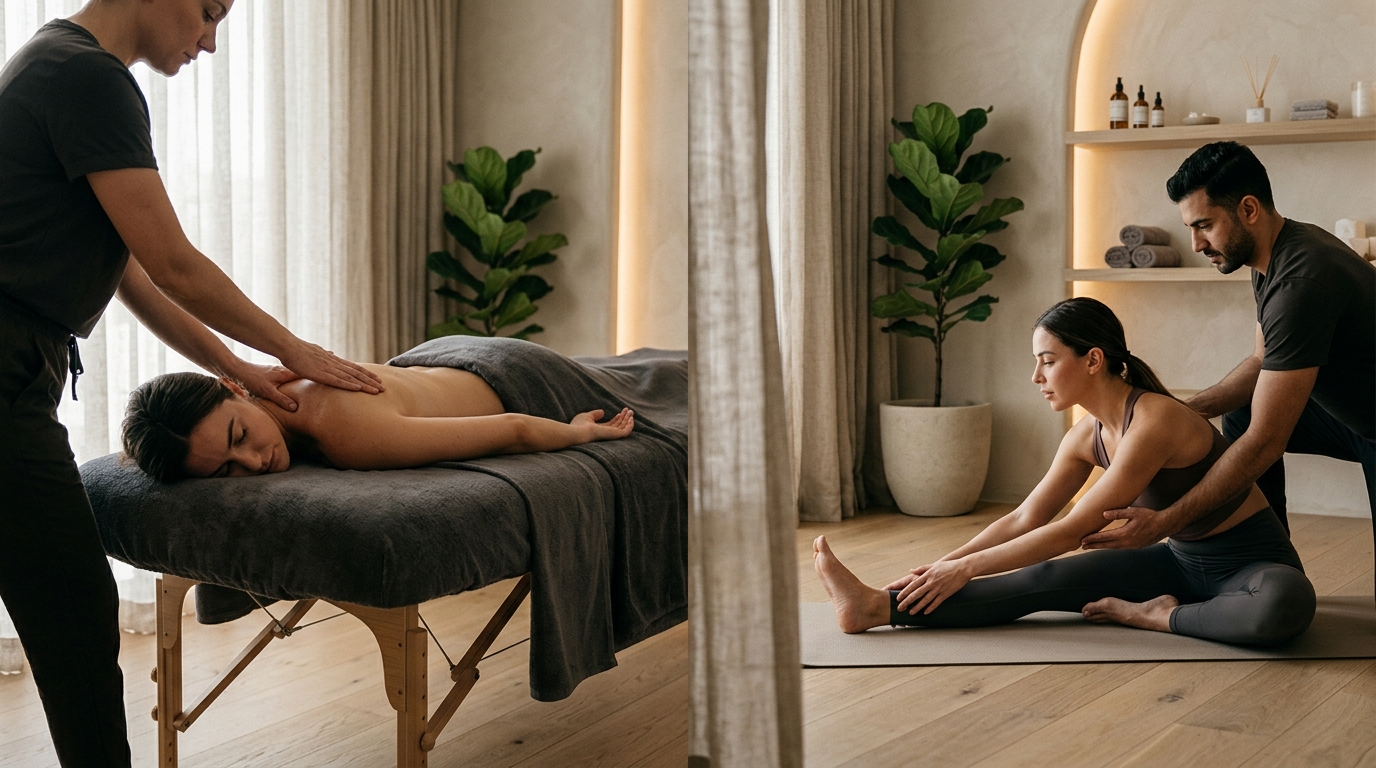
Choosing the right recovery modality can significantly impact your physical longevity and daily comfort. According to recent wellness industry reports, over 60% of adults experience chronic musculoskeletal pain, yet many struggle to identify the most effective intervention for their specific symptoms. While both massage therapy and assisted stretching aim to alleviate tension, they operate through fundamentally different physiological mechanisms. Understanding these differences is critical for optimizing your health outcomes, whether you are an athlete seeking performance gains or a professional combating sedentary stiffness.
Understanding the Core Mechanisms
To make an informed decision, you must first understand how each therapy interacts with your body. Massage therapy primarily targets the soft tissue through manual manipulation. It focuses on breaking down adhesions, improving blood flow, and triggering the parasympathetic nervous system to induce relaxation. In contrast, assisted stretching involves a therapist guiding your limbs through specific ranges of motion. This process lengthens the muscle fibers and resets the neuromuscular junctions, effectively increasing your active range of motion.
At LIMBR, we recognize that these are not mutually exclusive but rather complementary tools in a comprehensive wellness strategy. The choice between them depends on whether your primary goal is immediate relaxation and pain relief or long-term structural improvement and mobility enhancement.
The Role of Massage Therapy
Massage therapy is a time-tested modality for managing stress and acute muscle tension. It works by applying pressure to specific points in the muscle tissue to release knots and trigger points. This technique is particularly effective for individuals dealing with high levels of cortisol or those who have experienced recent physical trauma.
Physical and Mental Relief
The benefits of massage extend beyond the physical. Studies indicate that regular massage can lower blood pressure and reduce anxiety levels. By stimulating the vagus nerve, massage helps shift the body from a state of fight-or-flight to rest-and-digest. This is crucial for professionals in high-pressure environments who need to decompress effectively.
Best Use Cases
Massage therapy is ideal for:
- Acute pain management and injury recovery.
- Stress reduction and mental clarity.
- Improving local circulation in specific areas.
For those seeking deep relaxation and targeted pain relief, our therapeutic services offer a range of body and face massages designed to rejuvenate your skin and relieve tension.
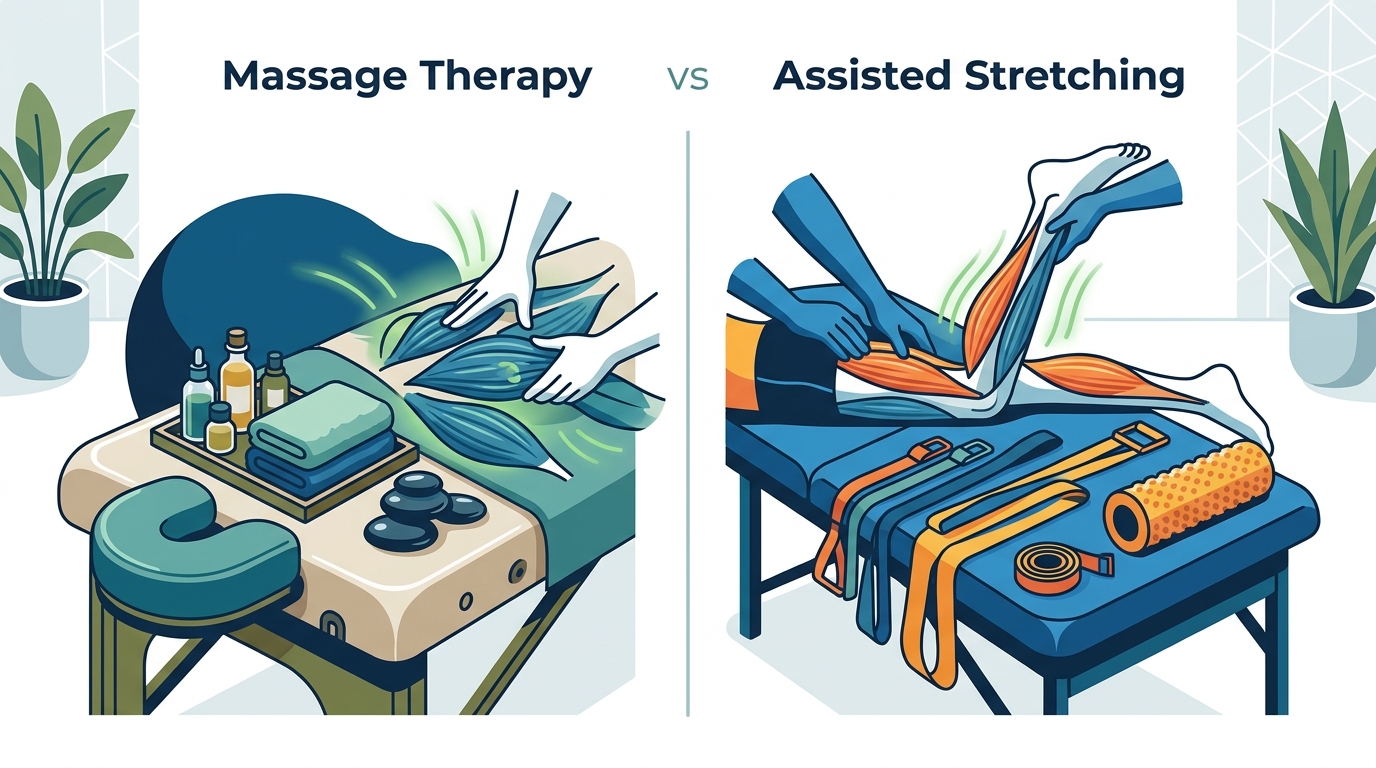
The Power of Assisted Stretching
Assisted stretching, often referred to as mobility training, is gaining traction as a superior method for long-term physical health. Unlike massage, which is passive, assisted stretching requires your muscles to engage and relax under the guidance of a therapist. This active participation helps retrain your body to accept a greater range of motion.
Enhancing Mobility and Flexibility
Mobility training has exploded in popularity in recent years because it addresses the root cause of many movement dysfunctions. When muscles are tight, they restrict joint movement, leading to compensatory patterns that can cause injury elsewhere. Assisted stretching helps correct these imbalances by lengthening shortened muscles and strengthening the opposing muscle groups.
Best Use Cases
Assisted stretching is ideal for:
- Athletes looking to improve performance and prevent injury.
- Individuals with sedentary lifestyles who need to combat stiffness.
- Those seeking to improve posture and alignment.
Our signature mobility classes are designed to help you cultivate better body functionality, stability, and flexibility for day-to-day life.
Comparative Analysis of Services
The table below summarizes the key differences between massage therapy and assisted stretching to help you decide which modality aligns with your goals.
| Feature | Massage Therapy | Assisted Stretching |
|---|---|---|
| Primary Goal | Relaxation and pain relief | Increased range of motion |
| Mechanism | Manual manipulation of soft tissue | Guided passive stretching |
| Best For | Stress, acute tension, circulation | Flexibility, posture, injury prevention |
| Duration of Effect | Short to medium term | Long term with regular practice |
| Active/Passive | Passive | Active engagement required |
Key Takeaways
- Mobility is a necessity: At LIMBR, we believe mobility is a necessity, not a luxury, for maintaining a pain-free lifestyle.
- Complementary benefits: Combining massage for relaxation with stretching for mobility yields the best overall results.
- Sedentary counteraction: Assisted stretching is particularly effective for combating the effects of prolonged sitting.
- Performance enhancement: Athletes use mobility training to express strength and endurance with greater efficiency.
- Personalized care: Our programs are customized to fit all fitness levels and individual needs.
- Holistic approach: We integrate state-of-the-art techniques with personalized care for transformative results.
- Regular practice: Consistency is key to seeing long-term improvements in flexibility and joint health.
Frequently Asked Questions
Can I do both massage and assisted stretching in the same session?
Yes, many clients benefit from a combination of both. Massage can loosen tight tissues, making assisted stretching more effective and less painful. Our holistic wellness programs often integrate these techniques for maximum benefit.
Which is better for back pain?
Both can be effective, but the choice depends on the cause. If the pain is due to muscle spasms, massage may provide quicker relief. If it is due to tightness restricting movement, assisted stretching is often the better long-term solution.
How often should I get assisted stretching?
For optimal results, we recommend assisted stretching sessions once or twice a week. This frequency helps maintain flexibility and prevents the muscles from tightening up again.
Is assisted stretching painful?
It should not be painful. A skilled therapist will guide you to the edge of your comfort zone, ensuring you feel a deep stretch without triggering a protective muscle contraction.
What is the difference between mobility and flexibility?
Flexibility is the ability of a muscle to stretch passively. Mobility is the ability of a joint to move actively through a range of motion. Both are essential for overall health.
Do you offer corporate wellness packages?
Yes, LIMBR offers tailored corporate wellness programs designed to improve employee productivity and reduce absenteeism. Contact us to learn more about our corporate solutions.
What should I wear to a stretching session?
Wear comfortable, flexible clothing that allows for a full range of motion, such as leggings and a fitted top. Avoid restrictive jeans or heavy jackets.
Begin Your Wellness Journey
Whether you choose massage therapy for immediate relief or assisted stretching for long-term mobility, the most important step is taking action. At LIMBR, we are dedicated to helping you unlock your body's true potential. Visit our classes page to explore our tailored programs or book a session today to start your transformation.