
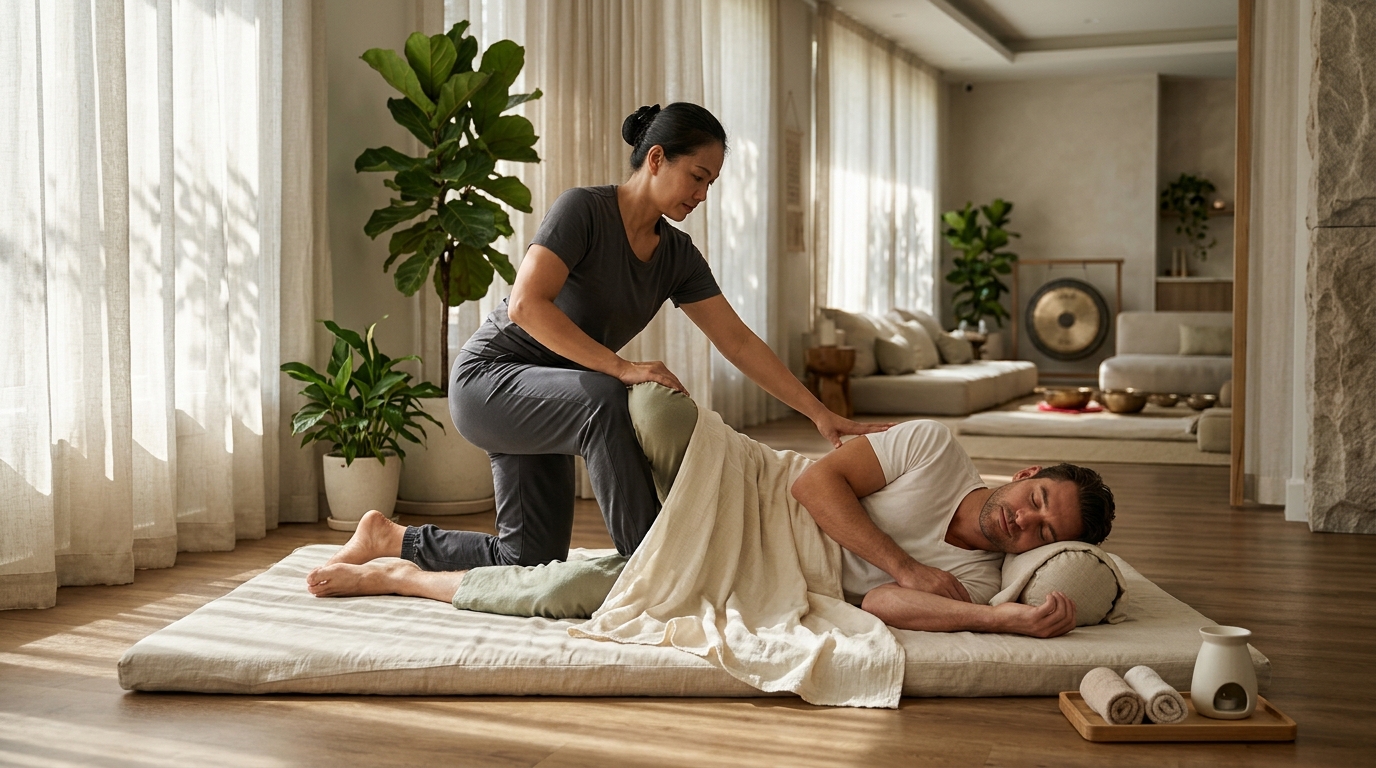
Thai massage is a full-body therapy using rhythmic pressure and assisted stretching. It differs from Western massage by treating the body as a connected system rather than isolated muscles. This approach enhances joint mobility and nervous system regulation. At LIMBR, we integrate these evidence-based techniques to support holistic recovery and physical balance for clients in Bahrain.
The Mechanics of a Traditional Session
A standard Thai massage session typically lasts between sixty and ninety minutes. The practitioner works on a mat on the floor, and the client remains fully clothed in comfortable, loose-fitting attire. This setup allows for a wide range of movement that is impossible on a raised massage table. The therapist uses their hands, thumbs, elbows, knees, and feet to apply rhythmic pressure along the body's energy lines.
The session usually begins with the client lying on their back. The practitioner uses their feet to press along the legs and arms, promoting circulation and relaxing the muscles. They then move to the torso, using their hands to knead the shoulders, neck, and back. The pressure is firm but controlled, focusing on releasing tension in the fascia and muscle tissue. This initial phase prepares the body for more dynamic movements.
Assisted Stretching and Joint Mobilization
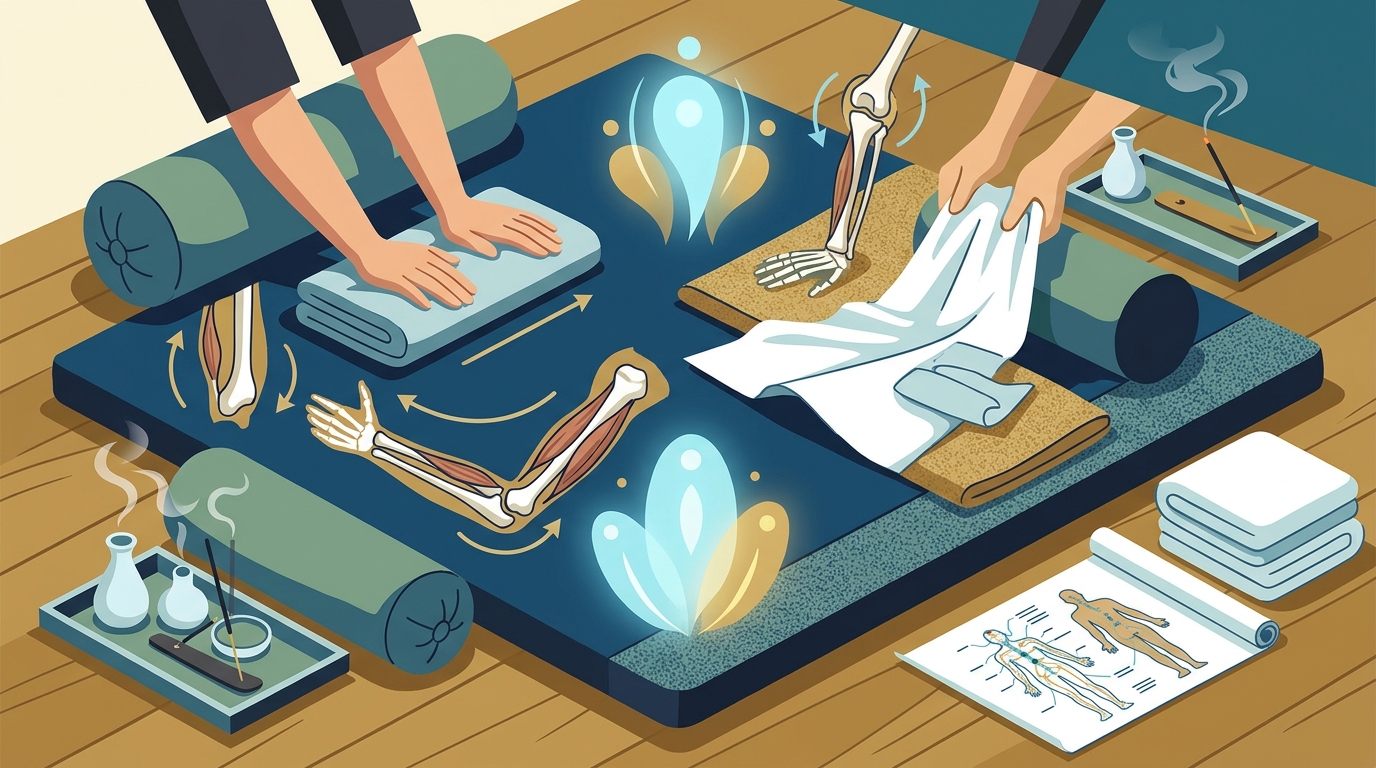
The defining feature of Thai massage is the use of assisted stretching. The practitioner guides the client's limbs into various positions, mimicking yoga poses. This is not passive stretching; the client must actively engage their muscles to maintain the position. This active engagement builds strength and control within the range of motion. It is a key differentiator from passive Western massage techniques.
For example, the therapist might lift the client's leg and rotate the hip to open the hip flexors. They may also guide the arms overhead to stretch the lats and shoulders. These movements improve joint mobility and reduce stiffness. By moving joints through their full range, the therapy helps prevent injury and improves functional movement. This is particularly beneficial for individuals with sedentary lifestyles or those recovering from minor strains.
Physiological Effects and Recovery
Research suggests that Thai massage can reduce pain and improve range of motion. A study published in the Journal of Alternative and Complementary Medicine found that Thai massage was effective in decreasing pain and improving mobility in patients with chronic conditions. The rhythmic pressure stimulates the parasympathetic nervous system, which promotes relaxation and lowers stress hormones. This physiological shift aids in faster recovery after physical exertion.
The therapy also enhances blood flow and lymphatic drainage. This helps remove metabolic waste products from the muscles, reducing soreness and inflammation. For athletes or active individuals, this can mean shorter recovery times between training sessions. At LIMBR, we often recommend Thai massage as part of a broader recovery protocol. It complements other services like infrared sauna and cold plunge to optimize overall wellness.
How It Differs from Western Massage
Western massage, such as Swedish or deep tissue, typically focuses on specific muscle groups using kneading, tapping, and friction. The client usually lies on a raised table, and the therapist works on one area at a time. In contrast, Thai massage is a full-body practice that views the body as an interconnected system. The therapist moves around the client, using their entire body to apply pressure and stretch.
This holistic approach means that Thai massage addresses not just muscle tension but also joint alignment and posture. It is more dynamic and physically demanding for both the client and the therapist. While Western massage is often used for relaxation or specific pain relief, Thai massage is a form of active therapy. It requires the client to participate in the movement, making it a unique blend of massage and yoga.
Integrating Thai Massage into Your Wellness Routine
Thai massage is not just a one-time treatment; it is a practice that can be integrated into a regular wellness routine. For most people, a session every two to four weeks is sufficient to maintain benefits. However, those with high physical demands or chronic tension may benefit from more frequent sessions. Consistency is key to achieving long-term improvements in mobility and relaxation.
At LIMBR, we offer Thai massage as part of our comprehensive wellness services. Our practitioners are trained in evidence-based techniques and personalized care. We combine traditional Thai massage with modern recovery methods to create a tailored experience for each client. Whether you are an athlete looking to improve performance or an office worker seeking relief from stiffness, Thai massage can be a valuable addition to your routine. Explore our classes and services to find the right fit for your goals.
Key Takeaways
- Thai massage is a full-body therapy using rhythmic pressure and assisted stretching.
- It differs from Western massage by treating the body as a connected system.
- The therapy involves active participation from the client, similar to yoga.
- It improves joint mobility, reduces pain, and promotes nervous system relaxation.
- Research supports its efficacy in decreasing pain and improving range of motion.
- It is a dynamic practice that addresses posture and alignment, not just muscle tension.
- Regular sessions can be integrated into a broader wellness and recovery routine.
Frequently Asked Questions
Do I need to be flexible to receive a Thai massage?
No, you do not need to be flexible. The therapist guides you into positions that are safe and comfortable for your current level of mobility. The goal is to improve mobility, not to force you into advanced poses.
Is Thai massage painful?
Thai massage involves firm pressure, but it should not be painful. The therapist adjusts the pressure based on your feedback. If you experience pain, communicate this immediately so the therapist can modify the technique.
How long does a Thai massage session last?
A standard session typically lasts between sixty and ninety minutes. This duration allows for a comprehensive full-body treatment, including pressure work and assisted stretching.
Can Thai massage help with back pain?
Yes, Thai massage can help with back pain by releasing tension in the muscles and improving spinal mobility. It is often used as a complementary therapy for chronic back issues, but you should consult a physician if you have severe or acute pain.
What should I wear to a Thai massage?
You should wear comfortable, loose-fitting clothing that allows for a full range of motion. Avoid tight jeans or restrictive fabrics. The session is performed on a mat on the floor, so you will be moving and stretching.
Is Thai massage suitable for everyone?
Thai massage is suitable for most people, but it may not be appropriate for those with certain medical conditions, such as severe osteoporosis, recent surgery, or acute injuries. Always consult with a healthcare provider before starting any new therapy.
Experience the Difference at LIMBR
Discover the unique benefits of Thai massage at LIMBR, Bahrain's pioneering wellness center. Our expert practitioners combine traditional techniques with modern recovery science to help you move better and feel your best. Book your session today and start your journey toward holistic wellness.